
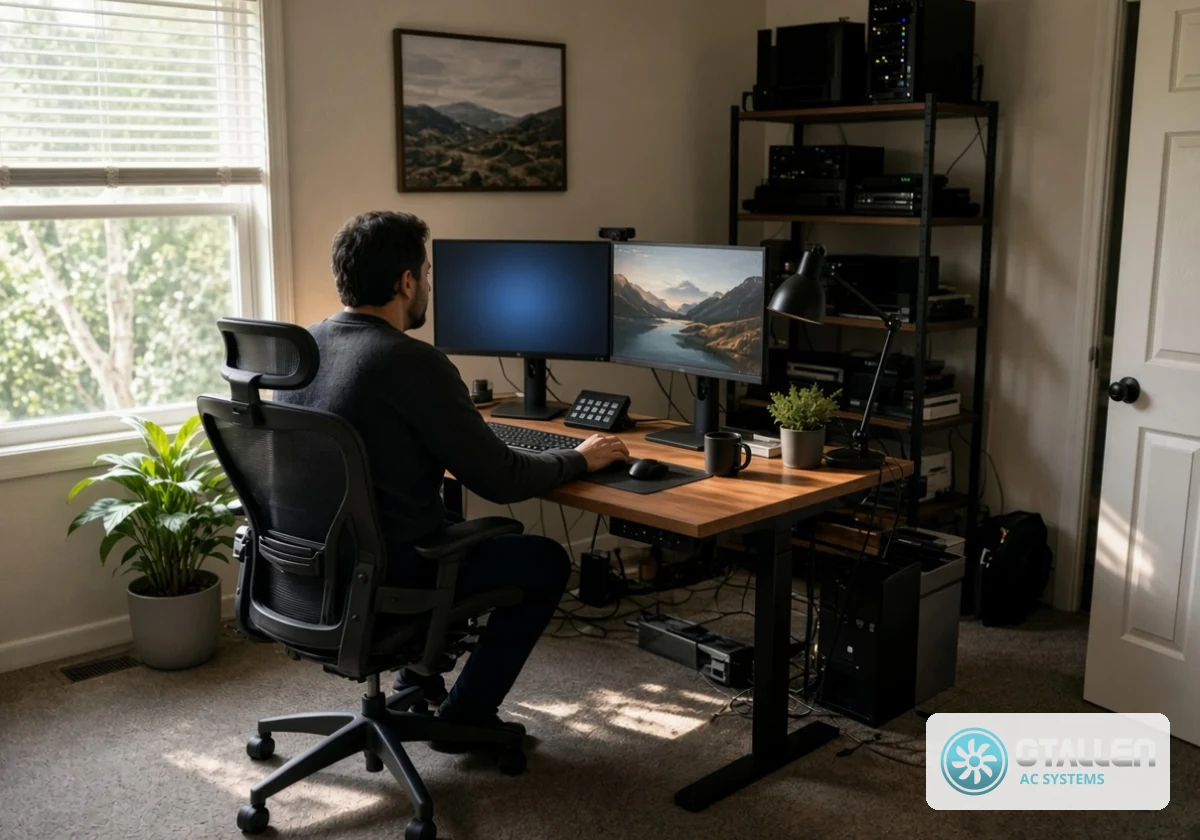
Home office air conditioning works best when it cools the one room you work in and leaves the empty rooms alone. Running a whole-house system for one desk cools bedrooms nobody’s using, and you pay for each of them.
That waste adds up once working from home becomes a five-day routine through a Queensland summer. Gtallen helps homeowners choose air conditioning that suits how they live, and a single office is an easy room to get right.
This guide compares split systems, portable units and window boxes for cooling a home office, then covers sizing, placement and the daily habits that cut running costs. Read on before you buy.
Why Does One Room Need Its Own Cooling Plan?

A home office runs on a different timetable and heat load from the rest of the house, so it needs cooling that follows those hours. You sit there from morning to late afternoon, while the bedrooms and living areas mostly stay empty until evening.
On top of that, the office makes its own heat. Your desktop computer, two monitors, and printer all give off warmth, and your body adds more across a long day (a closed door traps every bit of that warmth inside). In our experience with home office setups, the study is often the warmest room in the house by mid-afternoon.
Orientation plays a part too. West-facing offices take direct sun through the glass right when your workload peaks, so the room heats up at the worst possible time. If you’ve ever tried to finish a spreadsheet with your forearms sticking to the desk, you’ll know how quickly your focus slips once the air turns stuffy.
All of that heat builds during work hours, which is exactly when a whole-house setup wastes the most. Ducted systems still run a large indoor fan and push air through ducts built for every room. Zones that close off the empty rooms help, but most older homes lack them. That’s a lot of energy consumption for one occupied desk, while a reverse cycle split in the office can shut down the moment you log off.
Single Room Cooling Options: How Split Systems, Portable Units and Window Boxes Compare
With the reasons for a separate plan sorted, the next choice is the type of unit. The three single room cooling options differ in running cost, noise, and how much wall or window they take up.
Below, we’ve compared how each one performs in a working office.
| Option | How it works | Noise at the desk | What it means for your office |
|---|---|---|---|
| Split system (reverse cycle) | A wall-mounted indoor head connects by pipes to a compressor outside | Quiet, because the compressor sits outdoors | Suits a permanent office used year-round, and as a heat pump it handles heating in winter too |
| Portable air conditioner | The whole unit sits on the floor and vents hot air out a window through a hose | Loud, because the compressor runs beside you | Suits renters or short-term setups where you can’t drill through a wall |
| Window box | One self-contained unit sits in the window frame | Moderate, because the compressor hangs just outside the glass | Suits a room with a window frame that fits the unit and a view you’re happy to give up |
Running cost is left out of the table because it needs its own explanation. CHOICE testing of portable air conditioners in 2026 found portables can cost about twice as much to run as a split system of a similar size.
As a rough guide, a 2.5 kW split system running for eight hours on a work day costs roughly $1.50 to $2.50, depending on your electricity rate and thermostat setting. A portable unit of similar capacity costs roughly $3 to $5 for the same hours. Over a 90-day Queensland summer, that difference adds up to $135 to $225.
That’s why a split system makes the most sense for a room you work in every weekday, though leases often rule out drilling new wall holes.

Sizing and Placing a Split System for a Home Office
Once the type is settled, capacity and position decide whether the unit actually performs. An oversized unit cycles on and off in short bursts, while an undersized one runs flat out all afternoon without reaching your set temperature.
Working Out the Kilowatts Your Room Needs
Your room’s floor area sets the starting point for capacity, which installers measure in kilowatts (kW). Ceiling height and sun exposure then push that figure up or down.
Beyond those two, count the heat your equipment adds. Gaming PCs or a bank of monitors can tip a small room into the next size up, so list every device before you ask for a quote.
For reference, a typical home office of 10 to 15 square metres with standard ceiling height needs a split system rated at 2.5 to 3.5 kW cooling capacity. West-facing rooms with multiple monitors may need 3.5 to 5 kW. These figures give you a starting point for quotes, but your installer should confirm the final size based on the room’s full heat load.
From there, ask your installer to match all three factors when quoting. A unit with a higher SEER rating gives you the same cooling for less energy, so compare SEER numbers across quotes.
Where the Indoor Head Should Sit
Mount the indoor head high on a wall where its airflow crosses the room before it reaches you. Cold air blowing straight onto your neck gets uncomfortable within the first hour.
Instead, aim for a spot beside or behind your desk line. Keep it clear of bookshelves and curtains, which block the air it draws back in and make the fan work harder.
Then check the pipe run to the outdoor unit. Shorter runs keep the installation simpler and usually keep the quote lower. Also, leave enough clearance below the indoor head for a technician to reach the filters and drain tray during a service. A unit boxed in by a tall bookcase makes routine maintenance harder than it needs to be.
Outdoor Unit Placement and Noise
The outdoor unit holds the compressor, so it makes most of the noise. Placing it under your office window brings that hum straight back to your desk.
That’s why a side wall or rear corner often works better for a working room. Keep the unit shaded and leave at least 30 cm of clear space on the air discharge side and 15 cm on the other sides. This way, the unit can release heat without restriction (check your model’s installation guide for exact clearances).
Think about the neighbours as well. Compressors facing their bedroom window can lead to complaints, so point yours toward your own yard or driveway.
Doors, Blinds and Insulation That Help the Unit
The room’s shell decides how hard the unit has to work. Closing the office door keeps cooled air in and stops warm hallway air drifting through.
It also blocks the sun before it reaches the glass. External blinds and awnings stop heat outside, while internal blinds only catch it once it’s in the room. Finally, check the ceiling insulation above the office. If it’s thin or missing, topping up that one section cuts the running cost of every cooling hour.
Energy Efficient Office Cooling Habits That Cut the Running Cost
Once the room’s shell is sorted, energy-efficient office cooling comes down to how you run the unit.
Temperature is the first setting to check. The NSW Government’s seasonal energy-saving tips from 2026 suggest setting your air conditioner between 23 and 26°C. They add that every degree higher can save about 10% on your air conditioning bill.
Timing helps as well. Switching the unit on shortly before you start work lets it cool the room at a steady pace, while cranking it to 18°C on a hot afternoon only makes the compressor run harder for the same result. Dry mode is often the most overlooked button on a humid Brisbane day. It pulls moisture from the air, which makes 25°C feel noticeably cooler without lowering the thermostat.
If you’re keen to trim the running cost further, have a look at these five habits:
- Set the timer to switch off at your usual knock-off time.
- Rinse the indoor filters whenever you see a grey film of dust on them.
- Keep the office door shut while the unit’s running.
- Turn off monitors and printers you’re not using, since they add heat.
- Book regular AC maintenance so a technician can check the drain line and refrigerant before summer.
Pick two of these to start this week, then compare your next quarterly bill against the last one. That side-by-side reading shows you which habits are earning their keep.

Cool the Desk, Not the House
Measure your office, note which way its window faces, and count the devices on your desk. Those three details tell your installer most of what they need to quote the right unit.
For most home offices used five days a week, a reverse cycle split system between 2.5 and 3.5 kW pays for itself against a portable within the first year of running costs. Pair it with a closed door, external blinds, and the 23 to 26°C range, and you’ll cool your desk without paying for every empty room in the house.
Ready to get a quote? Contact Gtallen for advice on the right air conditioning for your workspace.

Recent Posts
The Home Office Air Conditioning Problem: Cooling One Room Without Wasting Energy
Home office air conditioning works best when it cools the …Read More »
Air Conditioner Repair Compared with Replacement: How Do You Decide?
You choose between air conditioner repair and air conditioner replacement …Read More »
Split System or Ducted Air Conditioning: Which One Is Right for Your Home?
Choosing between a split system and ducted air conditioning comes …Read More »
Reverse Cycle or Cooling Only AC: What Is the Difference Between These Systems?
Reverse cycle air conditioners heat and cool your home, while …Read More »
Why Air Conditioner Placement Changes Comfort More Than Capacity
You’ve done the research, compared kW ratings, and picked an …Read More »
