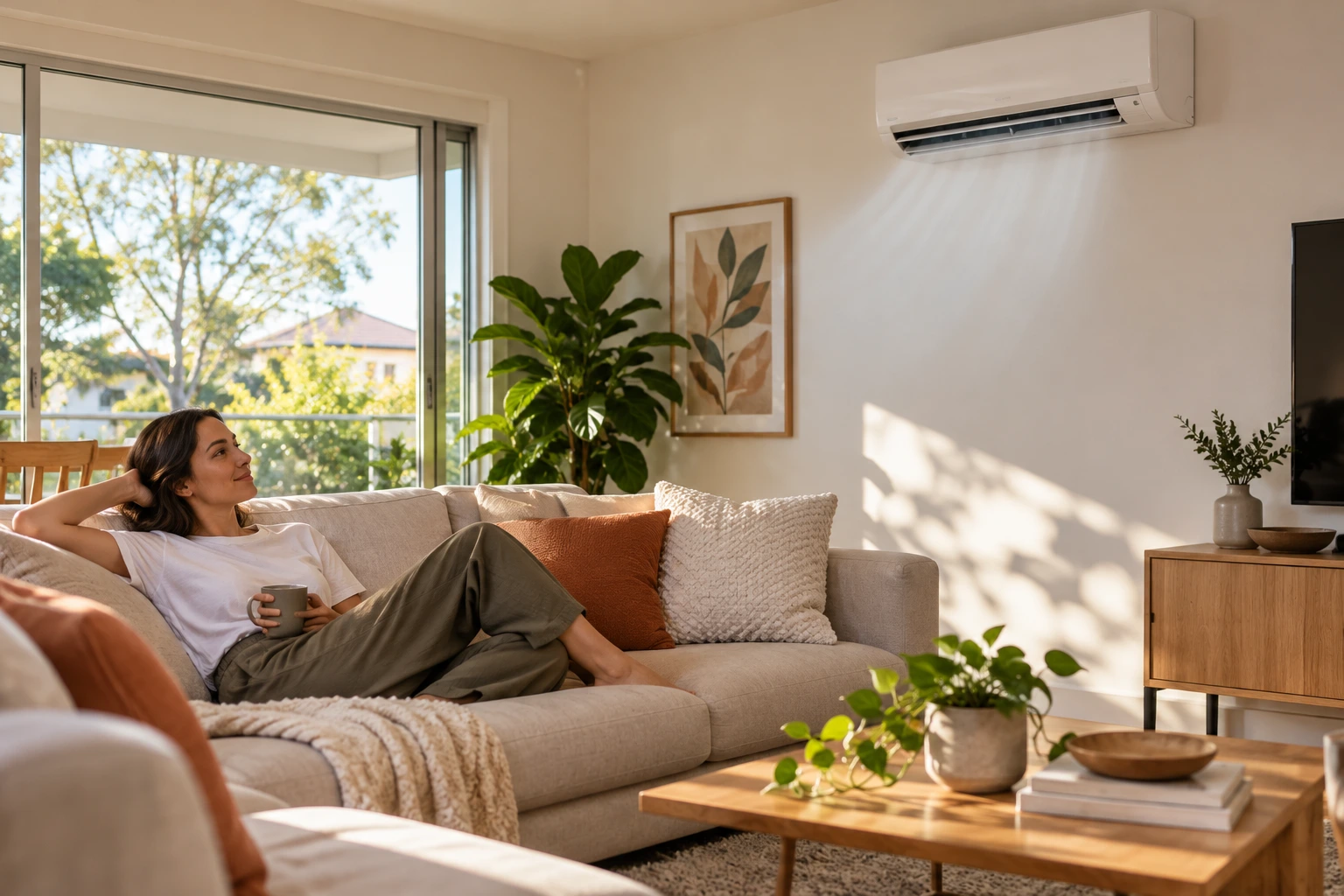
You’ve done the research, compared kW ratings, and picked an air conditioner with enough cooling power for your home. So why are some rooms still warm while others feel ice cold?
Air conditioner placement is usually the answer. The location of both your indoor and outdoor units controls how evenly cool air spreads and how hard the system runs through a Brisbane summer.
Our team at GT Allen has been installing air conditioning systems across Brisbane since 2003. We’ve seen how the best position for your air conditioner affects comfort, noise, and monthly energy costs. That’s why this guide covers both indoor and outdoor unit positioning and ducted system layout in your roof space.
We’ll also cover where ceiling fans and evaporative coolers run into limits.
How Air Conditioner Placement Affects Your Comfort

As we briefly mentioned, your air conditioner’s location inside and outside your home affects comfort, noise, and efficiency more than the unit’s kW rating alone. A 10kW system installed in the wrong corner of your living room will blast cool air at one wall while the other side stays warm.
That uneven cooling forces the unit to run longer cycles just to compensate, which wears down the compressor and drives up your electricity costs (and your power bill will be the first to remind you). We saw exactly that with a homeowner in Capalaba whose unit was rated well above their room size but still left a 4°C temperature gap between opposite walls every summer.
Now that you know what poor positioning does to your comfort, let’s look at where your indoor unit should actually go.
Where to Position a Split System Air Conditioner Indoors
Getting the indoor unit position right means every part of the room reaches the same temperature. Your home’s air movement and passive cooling design also influence how well your split system air conditioner distributes cool air across the entire space.
With that in mind, here are a few positioning rules for your indoor split system:
- Central Wall Mounting: Install the indoor unit on an interior wall near the centre of the room, away from direct sunlight and doors. From that position, cooled air spreads evenly instead of favouring one side.
- Clearance for Airflow: Keep furniture, curtains, and shelving away from the unit so return airflow isn’t blocked (even a bookshelf pushed too close can cause problems).
- Height on the Wall: Mount the unit above head height so cool air has room to travel across your living areas before it sinks toward the floor. You’ll notice a more consistent temperature near the bed at night as a result.
These placement details help your split system cool the space through summer without running extra cycles or wasting energy.
Where Your Outdoor Split System Sits and Why It Counts

Most homeowners spend weeks choosing the right air conditioner and about five minutes deciding where the outdoor unit goes. Yet, a poorly placed compressor can choke airflow, overheat in direct sun, and drive up your energy costs.
So the position you choose for the outdoor unit needs at least 300mm of clearance on every side so heat can escape and fresh air can circulate. South and east walls give compressors the easiest run because they cop far less direct summer heat. That’s something we’ve picked up after installing systems across Brisbane for over 20 years.
Noise is another factor to get right early on. If you install the unit too close to bedroom windows or a neighbour’s fence, you’ll get complaints that better ground positioning would prevent.
Here’s a tip to combat that: Adding external shading from a nearby tree or awning keeps the compressor cooler and cuts running costs during the hottest months. You can avoid these and other common AC installation mistakes by getting the outdoor location right from day one.
Your outdoor unit is only part of the equation, though, because your ducted system’s performance depends heavily on the roof space above.
How Whole House Air Conditioning Systems Work in Roof Space
Ducted air conditioning pushes cooled air through insulated channels inside your roof cavity and delivers it through vents in each room. How those ducts run, and where the registers sit, controls how evenly your home heats and cools across different rooms.
Two things inside the roof space determine whether that cool air actually reaches you.
Register Placement and Airflow Design
Your register locations control where conditioned air enters each space.
For example, registers near windows or external walls offset heat gain, so the ducted system doesn’t work as hard to cool individual rooms. Placing them closer to the centre spreads temperature more evenly across your living areas.
Roof Cavity Conditions
Your roof cavity limits how well your ducted system can perform. Poor insulation causes heat gain inside the ducts, and by the time that air reaches your bedroom at night, it’s barely cool anymore.
We’ve opened up roof cavities in older Brisbane homes around Wynnum and Logan with zero insulation left. And in every case, the system was running overtime for almost no result. That’s why regular dust removal and insulation checks help keep cooling consistent across multiple rooms long term.
Why Ceiling Fans and Evaporative Coolers Aren’t Enough

Now that you know where your air conditioner and ducted system should sit, it’s worth asking whether cheaper cooling options could do the same job.
In one word, yes. They help, but they can’t carry the load alone.
Pairing a ceiling fan with your air conditioner can make a room feel around 3°C cooler. The fan pushes conditioned air further across the space. And how airflow affects indoor comfort often starts with that kind of simple circulation. Without the air conditioner running, though, a fan only moves warm air from one side of the room to the other.
What’s more, evaporative cooling loses effectiveness once Brisbane’s humidity climbs above 60%. We still get calls from homeowners who expected an evaporative unit to handle a February in Brisbane (Brisbane summers don’t leave much room for guesswork). Once the moisture in the air is too high, the system can’t cool properly no matter how hard it runs.
Neither option replaces proper air conditioner placement for consistent cooling across different rooms at night or during summer.
Energy Efficient Air Conditioner Installation
Placing your air conditioner in the right position from day one cuts your energy costs and protects the system from early wear. Your house stays at a comfortable year-round temperature because the system runs shorter cycles and uses less energy across both heating and cooling.
But energy efficiency quickly drops when indoor and outdoor units sit in the wrong spot, even if the system has plenty of capacity. So where you install the unit deserves as much thought as which one you buy. Add-ons like wi fi control also help you manage temperature across different rooms and cut power waste.
GT Allen‘s licensed professionals check your home layout, ceiling height, insulation, and windows before recommending a location. If you’re planning a new air conditioner installation or want a second opinion on your current setup, reach out to our service team for a free consultation.

Recent Posts
Split System or Ducted Air Conditioning: Which One Is Right for Your Home?
Choosing between a split system and ducted air conditioning comes …Read More »
Reverse Cycle or Cooling Only AC: What Is the Difference Between These Systems?
Reverse cycle air conditioners heat and cool your home, while …Read More »Why Air Conditioner Placement Changes Comfort More Than Capacity
You’ve done the research, compared kW ratings, and picked an …Read More »
What Happens During a Professional Air Conditioning Site Inspection?
A professional air conditioning inspection checks your ceiling space, electrical …Read More »
How Home Renovations Can Affect Your Existing Air Conditioning System
Home renovations add floor space, remove walls, and change insulation …Read More »
