
Choosing between a split system and ducted air conditioning comes down to how many rooms you want to maintain the temperature and what sits above your ceiling. Both options heat and cool an Australian home well, but they get there with very different gear.
That gap is visible first when you weigh upfront cost against long-term comfort, a question Gtallen answers almost every working day. We install and service residential air conditioning across Sydney, and most homeowners want a straight answer before a single bracket goes on the wall.
This guide compares installation, running costs, and the home layouts each system suits, with real numbers instead of promises. Let’s get into it, so that you can decide yourself by the end of this blog.
Split System vs Ducted Air Conditioning: The Key Differences at a Glance

The choice narrows once you compare the points that drive most decisions. The table below lines those split and ducted differences up side by side.
| Comparison point | Split system | Ducted air conditioning |
|---|---|---|
| Coverage | One room each | Whole house |
| Installed cost | $2,500 to $5,500 | $9,000 to $20,000 |
| Hardware you see | Wall unit, outdoor compressor | Ceiling vents only |
| Control | Remote per room | Up to eight zones |
Each setup runs reverse cycle heating and cooling, so your decision lands on room count and roof access rather than raw performance. Pricing also shifts with the brand you pick and how hard your roof is to reach (steep roof pitches add labour hours to every ducted quote).
Air Conditioner Installation: What It Takes to Fit Each System

The debate turns practical on installation day. One crew works inside a single room for an afternoon, while the other spends days in your roof space.
Let’s walk through what each job involves before you book a site visit.
What a Split System Air Conditioner Install Involves
Your installer mounts the indoor unit on the wall and sets the outdoor unit on a slab or brackets, then copper pipe links the two. Because all that work stays inside one room, most single-head jobs finish in three to four hours through one small core hole.
Above all, split systems suit older homes and apartments where the roof cavity is too shallow for ductwork. The install stays inside one room, so ceiling access is irrelevant (most apartment blocks still want strata approval in writing).
Installation Cost: Comparing Ducted vs Split
Ducted air conditioning asks for more upfront. Installers run insulated ducts, fit a central unit in the roof, and cut vents into every ceiling. That work usually takes two to three days, which is why we quote $9,000 to $20,000 for a ducted air conditioner in a typical four-bedroom home.
Split systems stay cheaper per unit, though three or four of them across one house closes the gap sooner than most homeowners anticipate.
Ducted or Split System: Which Fits New Builds and Renovations?
New builds and full renovations favour ducted air conditioning. Ductwork drops in before the plaster goes up, so labour costs drop with it.
In contrast, a finished home with a shallow roof pitch is well suited to a split system, and each room keeps its own temperature setting. For many households, that combination of simplicity and individual control makes it the more sensible choice.
We’ve installed both split and ducted air conditioning systems on the same Melbourne street within a single week, and in each case the floor plan made the decision for us.
Comparing Running Costs and Energy Efficiency of Ducted and Split Systems
Running costs take over once the install sits behind you, and they track how much space you condition rather than the brand badge on the unit. Heating and cooling already make up 20 to 50% of the energy used in Australian homes, according to government energy figures.
Surprisingly, a split system cooling one bedroom overnight draws around 1 to 1.5 kilowatts, which is roughly 30 to 45 cents an hour. Once you run ducted air conditioning across a whole house, the draw climbs to 5 to 8 kilowatts, so the meter spins faster.
However, zoning rewrites that comparison, because you probably already know which rooms in your house sit empty all day. Shutting unused vents drops a ducted system’s draw to roughly what two split units pull together. Duct loss is the trade-off, since ducted air conditioners shed 5 to 15% of conditioned air.
Star ratings fill in the rest of the picture for both air conditioning systems. Most split air conditioning systems now hit 4 to 5 stars, and inverter compressors hold a steady temperature instead of cycling hard. Ducted AC systems reach similar ratings, though they add filter cleans and duct checks every few years (most owners budget around $300 for each duct service).
Over ten years, the sums usually favour split systems in smaller homes and ducted systems in houses where every room earns its keep daily.
Which Suits Your Home Layout, Split System or Ducted Air Conditioning?

Beyond the running numbers, your floor plan settles this question faster than any spreadsheet. Match your own home against the three points below:
- Rooms in Daily Use: Two bedrooms and a lounge suit split systems. A four-bedroom house with people in every room suits ducted. Count the rooms your family uses after 6 pm on a weeknight, since that number reflects your actual cooling load better than the total room count.
- Roof and Ceiling Space: A ducted system needs at least 600 mm of clearance above the ceiling for the central unit and the ductwork. Push open the manhole cover with a torch and measure from the top of the ceiling joists to the underside of the roof sheeting. Cathedral ceilings and shallow pitches rule out ducted entirely.
- Appearance and Noise: Wall-mounted units sit at head height in every room you condition, while ducted vents finish flush with the plaster. Split systems also put the indoor fan noise in the room with you, typically 35 to 45 decibels, roughly the level of a quiet conversation. Ducted systems move the main unit into the roof, so noise stays overhead.
The condition that separates them is daily room count. Once you know yours, the system picks itself.
Get the Right System Into Your Home
Both options deliver reverse cycle comfort, and the real gap sits in coverage, ceiling access, and what you spend on day one. Neither one outperforms the other once you match the system to the building it serves.
One or two rooms in daily use fit a split system, since you only condition the space you occupy. A four-bedroom house with people spread through it suits ducted air conditioning, where zoning holds one temperature across the plan.
Gtallen installs split systems and ducted air conditioning from the major brands with a 10-year warranty. Contact the team for a free site visit and a fixed quote.

Recent Posts
Split System or Ducted Air Conditioning: Which One Is Right for Your Home?
Choosing between a split system and ducted air conditioning comes …Read More »
Reverse Cycle or Cooling Only AC: What Is the Difference Between These Systems?
Reverse cycle air conditioners heat and cool your home, while …Read More »
Why Air Conditioner Placement Changes Comfort More Than Capacity
You’ve done the research, compared kW ratings, and picked an …Read More »
What Happens During a Professional Air Conditioning Site Inspection?
A professional air conditioning inspection checks your ceiling space, electrical …Read More »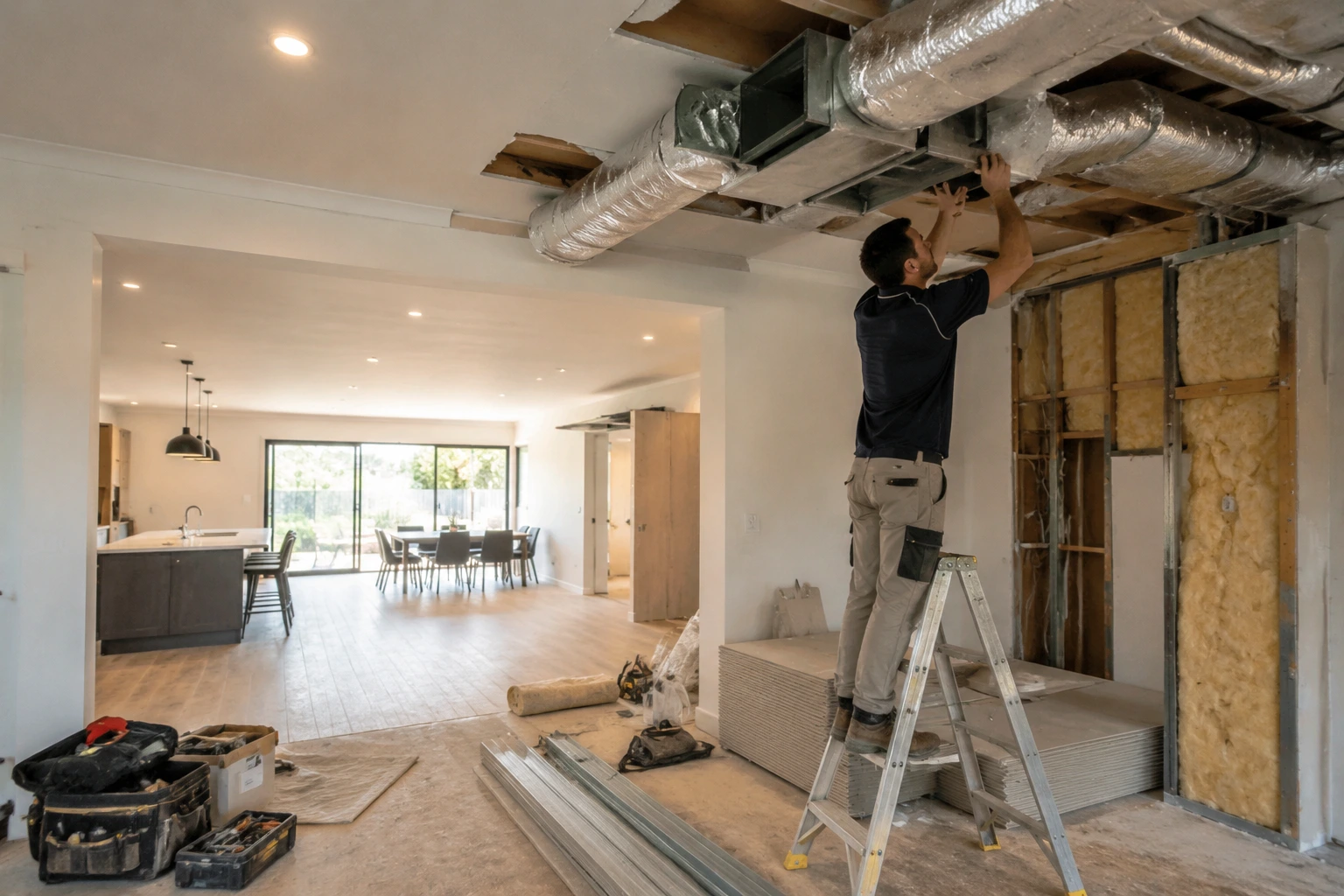
How Home Renovations Can Affect Your Existing Air Conditioning System
Home renovations add floor space, remove walls, and change insulation …Read More »
