
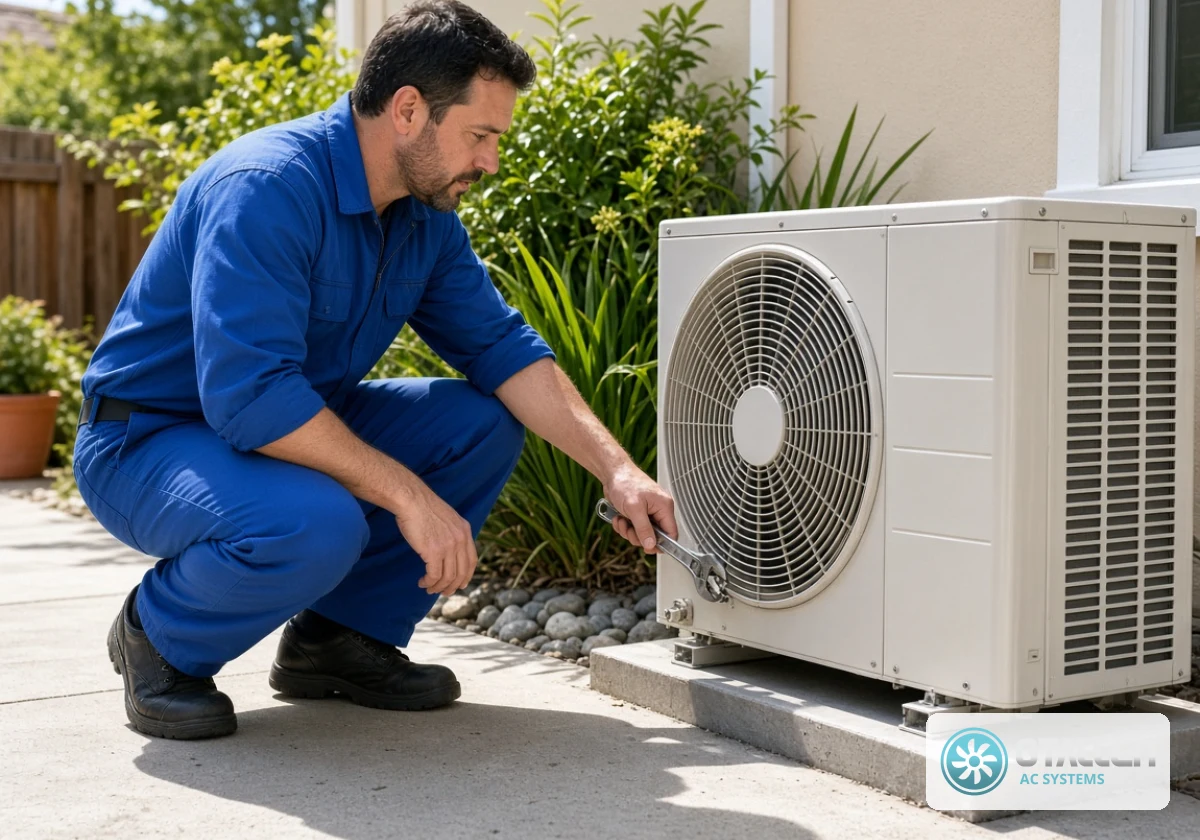
Air conditioner short-cycling happens when your unit switches on, runs briefly, and shuts off before the room cools down. Not to mention, that stop-start pattern increases power bills and leaves rooms sticky on hot nights. And frequent restarts put strain on the compressor and lead to costly repairs over time.
To help you avoid those repairs, this Gtallen guide explains how to identify short-cycling faults and what to check first. You’ll also learn when it’s time to call a licensed technician.
A few common warning signs can help you identify the likely fault.
What Is Air Conditioner Short-Cycling and Why Does It Damage Your Unit?

This repeated on-off cycle means your AC doesn’t run long enough to reach the set temperature. Each restart forces the compressor to draw a surge of power, which puts stress on its electrical and mechanical parts.
The compressor is the pump that moves refrigerant around the system, and it isn’t the only part affected. Frequent starts generate heat and strain, which can wear out contactors, capacitors, and the compressor itself sooner than expected.
The effects aren’t limited to the system’s components. Your AC also needs time to remove moisture from the air, so frequent shutdowns leave rooms feeling clammy. You might notice this on humid nights when the room feels cool, but the air still feels sticky.
With these symptoms in mind, it pays to watch the pattern before you guess at the cause. When the outdoor unit clicks on and off every few minutes, jot down the times. A technician can use that record to narrow the fault quickly and spend less time on diagnosis.
Short-Cycling Causes: Five Faults That Keep Your AC Stopping and Starting

That log of start and stop times becomes more useful once you know what each fault looks like. Airflow, temperature sensing, refrigerant charge, and sizing problems all cause short cycling.
These five faults have different warning signs you can look for at home.
A Clogged Air Filter Choking Airflow
A blocked air filter restricts airflow to the indoor coil. The coil then runs too cold, and the system shuts itself down early for protection.
To check yours, hold the filter up to a light. If you can’t see much light through the mesh, it’s time for a clean.
Rinse washable filters in lukewarm water and let them dry fully before refitting. A damp filter can restrict airflow, so don’t put it back while it’s wet. Our guide on how AC filtration and filter care work covers each filter type.
Thermostat Sitting in the Wrong Spot
A thermostat near a heat source or a cold draught reads the wrong temperature. Under a supply vent, for example, it senses chilled air and stops the system too soon.
Controllers often end up beside a sunny window or a kitchen bench, because that wall was convenient during installation. Lamps, TVs, and ovens can all throw the reading off as well.
Check where your wall controller sits right now. If it’s near these heat sources or a supply vent, a technician can move it to an inside wall, away from direct sunlight and appliances.
Low Refrigerant From a Slow Leak
Refrigerant carries heat out of your home, and a leak causes its pressure to drop. Low pressure trips a safety switch, which stops the compressor until pressure recovers.
You might spot ice on the outdoor pipes or hear a faint hiss near the leak. In some cases, the AC also blows warm air instead of cooling the room.
If you notice these signs, leave this fault to a licensed technician, since a top-up without a repair only delays the next shutdown. They’ll find and seal the leak first, then recharge to the correct level.
Evaporator Coils That Have Frozen Over
Ice on the evaporator coil (the indoor coil that absorbs heat) blocks airflow and confuses the sensors. A dirty filter or low refrigerant usually starts the freeze. Take a look at your indoor unit for any frost or water dripping from the casing. These signs could mean ice has formed and is starting to melt.
To help thaw the coil, switch off the cooling and use fan-only mode. Should the ice return, it’s time to book a service call.
An Oversized Unit Cooling the House Too Quickly
An oversized unit causes short-cycling because it cools the room so quickly that the thermostat cuts out early. Solar Victoria’s 2026 guide to air conditioner sizing warns this “could result in inconsistent temperatures, increasing your energy costs and wearing down the system over time.”
Rooms that chill quickly but still feel damp may indicate an oversized unit. This happens when installers estimate capacity using floor area alone. Continued cycling after you’ve ruled out the other four faults is another clue.
Ask for a proper heat load calculation before you replace anything. That calculation determines the right capacity for your rooms, insulation, and windows.
Troubleshooting Your Air Conditioner at Home Before You Book a Repair
With the likely culprits in mind, a few simple air conditioner troubleshooting steps can rule out common problems before anyone visits. These checks need little more than a torch, a step ladder and half an hour.
Start with your settings, because a very low set point makes the system work harder than it needs to. The NSW Government’s 2026 advice on reverse-cycle air conditioners says every degree higher in summer can cut your heating and cooling costs by 10%. It also recommends cleaning filters every few months to maintain airflow and efficiency.
Blocked filters and leaves around the outdoor unit can restrict airflow and cause frequent shutdowns. Sometimes, clearing away those leaves is enough to get your AC running normally again.
Try these checks before booking a repair:
- Air Filter: Clean or replace the filter. Once it’s clean, check that it sits flush in its slot so air can’t bypass the mesh. A loose fit lets dust pass through.
- Outdoor Unit: Clear plants, leaves, and rubbish from around the unit. It needs enough space on every side for air to flow, including above it, where overhanging branches can block airflow.
- Thermostat Area: Move lamps, TVs, and heaters away from the wall controller. These heat sources can affect the controller’s temperature reading. With the area clear, the controller can sense the room temperature more accurately.
- Indoor Unit: Ice around the coil or casing is another sign to watch for. When you notice frost, switching off cooling and using fan-only mode helps the coil thaw. Ice that returns after thawing usually needs a technician’s attention.
- Vents and Grilles: Blocked supply vents and return grilles can restrict airflow around your home. Furniture is often the cause, especially when it sits directly in front of an opening. Moving it aside gives the air room to circulate.
Your AC may still be switching on and off after you’ve completed all five checks. That usually means it’s time for a technician to investigate. Keep a note of what you’ve already ruled out, as it helps them narrow down the problem and save time during diagnosis.
Some Short-Cycling Problems Need a Licensed HVAC Technician

The faults left over after those checks usually involve refrigerant, wiring, or the compressor. These jobs need specialist tools, licences or safety training that homeowners don’t have.
The table below helps you see which faults you can handle yourself and which need a technician.
| Fault | Who Fixes It | What It Means for You |
|---|---|---|
| Dirty air filter | You | A clean restores airflow in minutes |
| Badly placed thermostat | Technician | Moving it means rewiring the controller |
| Refrigerant leak | Licensed technician | Handling refrigerant legally requires a licence |
| Repeat frozen coil | Technician | Recurring ice signals an airflow or charge fault |
| Oversized unit | Technician | You’ll need a load calculation and possibly new equipment |
For an older unit with a large refrigerant leak, it’s worth comparing repair and replacement costs. Ask the technician for both estimates before agreeing to a repair. That way, you’ll have a clearer idea of which option makes financial sense.
Stop the Stop-Start Cycle Before the Summer Heat Arrives
As you now know, short-cycling usually traces back to a specific fault, and dealing with it early can prevent further damage. Getting your AC running properly again also means a more comfortable home when summer temperatures rise.
So work through your filter, thermostat, and outdoor unit now, while the weather is still mild. That way, any air conditioning repair gets booked before the first heatwave fills every technician’s calendar.
Our team at Gtallen understands how frustrating it is when your AC keeps stopping before your home feels cool. We can help you find the cause and work towards getting your system running properly again.
Contact us today for advice and support before the summer heat arrives.

Recent Posts
Why Your Air Conditioner Short Cycles and What Homeowners Should Check
Air conditioner short-cycling happens when your unit switches on, runs …Read More »
Air Conditioning Installation in Heritage Homes: What to Check Before Drilling
Heritage home air conditioning works best when you check approvals …Read More »
Why Your Air Conditioner Feels Cold but Leaves the Room Sticky
An air conditioner not removing humidity usually has a fault …Read More »
The Home Office Air Conditioning Problem: Cooling One Room Without Wasting Energy
Home office air conditioning works best when it cools the …Read More »
Air Conditioner Repair Compared with Replacement: How Do You Decide?
You choose between air conditioner repair and air conditioner replacement …Read More »
